I work a lot now, folks. Or rather, I serve a lot. As an AmeriCorps member I am serving at a charter high school in Munhall, PA, and I am there from 7:15 in the morning until anywhere from 4:30 to 6:30 at night. It is wonderful! I am helping develop a documentary film-making club and a reading program, and I spend parts of my day recording music, or watching my kids dance and sing and educate their creative souls. They also goof off constantly, can’t stop talking, and are beastly, obstinate teenagers half the time. But the other half of the time makes up for that!
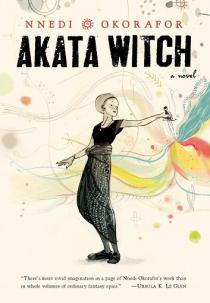
It’s hard for me to get through a book these days. I listen to audio books during my epic bus rides (an hour to two and a half some days…) and in this way managed to knock Cloud Atlas off my list. I read Maggie Stiefvater’s newest book – Blue Lily, Lily Blue – on a lucky free weekend day (loved it!). But it took me about 3 weeks to get through Nnedi Okorafor’s short story collection Kabu Kabu (which I didn’t particularly enjoy).
I made a wonderful discovery a few weeks ago, however, which has kept my reading life from being entirely depressing. While lusting over graphic novels that I couldn’t afford one Sunday afternoon at Copacetic Comics, I remembered that the Carnegie Library of Pittsburgh has a huge graphic novel collection – and the main branch is open on Sundays! Amazing city, this. I promptly hopped onto a bus and went to satiate my hunger.
 I read Craig Thompson’s (author of Blankets) first book – Good-Bye, Chunky Rice – while at the library that day, as well as the first volume of Aya, which was great. Writer/artist team Marguerite Abouet and Clément Oubrerie bring to life a lively heroine and a vibrant city in nineteen-year old Aya and the Yopougon of 1978 Ivory Coast days. She and her friends try to navigate young adulthood with humorous and heart-breaking success. The warm colors of the artwork are delicious, and the writing is decent. I’m eager to adventure further with Aya and her girlfriends.
I took home a huge pile of graphic novels that day, and I’ve been reading them in snatches over my own breakfast and while at school supervising the kids during their pre-class breakfast. I get through one every few days in this fashion, which helps me to maintain my readerly self-respect…!
David Prudhomme’s Rebetiko (trans. Nora Mahony) was another good one. It took me to 1936 Athens, where a rag tag group of Rebetiko musicians are being persecuted by the police. Dodging General Metaxas’ men at every turn, the men pursue their nightly parties full of hash, women, drink, and always the music that they truly live for. Prudhomme manages to convey through his artwork and words the sultry, mischievous, danger-edged feel of these nights, and the sound of Rebetiko – the blues of the Greeks.

Exit Wounds by Rutu Modan sent me spinning off to modern-day Tel Aviv, where a cab driver and a female soldier try to determine if Koby’s (the cab driver) father was one of the victims of a bombing in Hadera. Koby is reluctant at first, having been estranged from his father for years. As the pair unravel his father’s (possibly) last few months, Koby is forced to rediscover who his father is, and along the way examine who he himself has become. The story was interesting, but the artwork really won me over. It reminded me of Tintin a bit, with it’s clear lines and bright colors.

The Scrapbook of Frankie Pratt by Caroline Preston (possibly the world’s first “scrapbook novel”?) brought me back to the US in the 1920s. Preston told her tale through vintage postcards, magazine ads, catalog pages, ticket stubs, letters, fabric swatches, candy wrappers, patterns, menus, and more – the tale of Frankie Pratt, who always wanted to be a writer. The book is fun because of it’s format – the story is a little humdrum, but it is a treat to look at.
Actually, I came back to the US and stayed there for a bit, although I didn’t realize it because it took me awhile to notice that Unterzakhn by Leela Corman was set in New York’s Lower East Side. (I thought it was Russia, maybe?) The black and white artwork for this story is striking, and I found the story of sisters Esther and Fanya to be compelling, but frustrating. Life for these children of immigrants in 1910 was hard, and Corman brings out the rough and tumble of it. The girls each make choices in the hope that they’ll lead to a better life, and I watched in dismay and wonder as their choices led them down tangled pathways to failure and success.
The last book I finished was Ivy by Sarah Oleksyk. I was enchanted by the pretty cover, but the insides of the book didn’t live up to it. I won’t spend too much energy talking about it, since it is getting late and I’ll never get used to getting up at 5:30 a.m…!
The Carnegie Library of Homestead is across the street from the school where I serve, and I’m excited to go there tomorrow, return this stack, and check out a whole new pile of graphic novels. Because we all know I’ll be reading Gregory Maguire’s Egg and Spoon for all of the foreseeable future… (They might have set Wicked to music, but I’ve always found his books to be dense and interminable…somehow I enjoy them despite that!)
Just as much as I’ll need my coffee and muffin, I’ll be needing my breakfast reading!













 Ay, yi yi…Japanese ghosts…! I don’t often wander where they haunt, being fully aware of the fact that they do it with extra doom. I don’t want to be scared to death – and that’s what they do best! I did tremble my way through Rin Chupeco’s book, however, which stars


 The ocean at the end of the lane is in fact a duck pond, but Lettie Hempstock saw further and deeper than others. The unnamed narrator of Gaiman’s short novel finds his way back to the pond as an adult, and remembers all in a rush a series of events that nearly swept him away as a child. It began when a man committed suicide in his father’s car, at the lane’s end in front of Lettie’s farm. Something was released into the world, something dangerous and strange. Lettie promised no harm would come to him, and the little boy trusted her – even when evil forces found their way into his home and everything he knew about how the world fit together was challenged.
 Susan Hill’s two little books were a bit more spine-chilling. They are ghost stories, and both deal with the sort of haunting where the consequences of a childhood act must be paid for in the end. They have delicious, irresistible build ups, and the sort of creeping imagery that gets under your nails and bores into the back of your skull, until you have to look. They’re not BOO! in your face scary – Susan Hill is deftly subtle.


 All of this applies to Terry Farish’s book – The Good Braider – which is about a girl named Viola, who escapes South Sudan with her mother and comes to America to start a new life. Terry Farish (whose first job was working for the Red Cross in Vietnam during the war) lived in Portland, ME, for years and made many friends among the real-life Sudanese refugees who immigrated there. In the book’s Acknowledgments she lists them and speaks about how they impacted her life and helped build the story she came to write.



 Mare’s story is one of stubborn determination to make something of herself in a world that was mostly unwilling to support or assist her. Society and her mother expected her to work in Miss Ida’s house dusting furniture for the rest of her days, but Mare had other plans. An education, a good job as a secretary, and a pleasant place to live for her sister Josephine and herself didn’t seem like much to ask for. It was more than she’d ever get in the Deep South of the 1940s though, so Mare ran away from home and joined the 6888th African-American battalion of the Woman’s Army Corps.


 None of
  This is the first in a series, I believe, and for all my complaints I will most likely keep reading. Even if this book was somewhat uneven, I liked it a lot and I am eager to seek out more of Nnedi Okorafor’s books. She has won several awards, and one of her adult books – Who Fears Death – sounds particularly interesting to me. I am glad to have stumbled into her in my library last week!


 what we have here is a failure to communicate