 Volume 2 of In Search of Lost Time by Marcel Proust – Translated by James Grieve
I began this book on March 6th and finally finished it May 17th. It is a strange thing for me to be so caught up in a book, and yet struggle so much to finish it. Somehow though it seems fitting – there should be no rush to reading Proust.
In this book we pick up where Swann’s Way left off – with Marcel (I called him ‘the boy’ in my notes for a long time, then abruptly started calling him Marcel) still completely obsessed with Gilberte. One of the strongest themes in the book for me was the idea of not so much being in love with a person, as being in love with love. Marcel’s epic relationship with Gilberte comes to it’s painful end and he finally gets to leave Paris and travel to Balbec, where he spends the summer buzzing from one lovely flower of a girl to the next.
While I find myself alternately despising and feeling sorry for Marcel, in this second volume I couldn’t help identifying with him frequently. I think he is roughly the same age as me in this book, and it seemed that he was learning things about life that I’ve just begun to understand and even helped to clarify my own foggy thoughts on a few matters.
Several episodes were particularly interesting to me. When Marcel finally gets to go out to the theater and see a famous actress in a classic role, he gets very excited and builds up what the experience will be like in his own mind, and then is disappointed and puzzled by what he actually sees. Of course it is always dangerous to dream too well about something you’re looking forward to, and I’ve certainly shared Marcel’s disappointment. The more interesting thing to me happens when he goes home and tries to discuss the performance with a man he considers to be an intellectual. He has trouble articulating his opinion.
‘”Well, yes, I was listening as hard as I could, to see what was so great about her. I mean, she’s very good…”‘
Marcel didn’t in fact think she was anything special, but when M. de Norpois launches into his own opinion of her astonishing talent, Marcel nods along and eventually convinces himself so thoroughly of the truth of what the Marquis says, that he believes it to be what he himself had thought all along.
I wrote in my notes, I can relate to not understanding what all the fuss is about, or through lack of comparison or experience not understanding why something is famous or considered great. I’ve definitely sought the opinions of others in order to better comprehend why something is popular, taking their opinions for my own when I lack the information to establish my own. Not always a good thing, and certainly not totally satisfying.
It’s all part of the learning process though, and Proust introduces two different examples of how a young person can be helped or hindered by the older, more experienced people around them. M. de Norpois discards any thoughts voiced by Marcel that he doesn’t agree with. On the other hand, when Marcel meets a favorite author, he has a lively exchange of opinions with him on the subject of the play he saw. Bergotte doesn’t agree entirely with Marcel, but he doesn’t disregard the boy’s opinion – therefore their discussion builds Marcel’s confidence while M. de Norpois only made him feel small and silly.
Another episode that intrigued me was the tragic termination of Marcel’s love for Gilberte. After many trials (mostly of the mind and soul) and a stroke of luck, he finally is able to endear himself to Gilberte’s parents – M. and Mme. Swann. From that point on he is welcome in their house, and goes to see Gilberte almost every day, believing himself to be utterly in love with her. For her part she is kind to him and generally enjoys his company, but I never got the feeling that she returned his affection to the extent that he hoped. Marcel, though, believes that this perfect life and his love can be in danger from nothing. Then they have a bit of an argument – a case of careless words, and hurt feelings that leaves Marcel shocked with the knowledge that perhaps Gilberte doesn’t love him. He resolves never to see her again.
‘…when such a sadness comes right at the moment when we are basking in the full delight of being with that person, as was my case with Gilberte, the sudden depression which replaces the broad, tranquil sunlight of our inner summer sets off within us a storm so wild that we doubt our ability to weather it.’
At the time I read this section, I had just had a disagreement with my boyfriend over something very silly which had been resolved only after a day of intense unhappiness. This passage came as a somehow soothing explanation for what I had experienced:
‘In love, happiness is an abnormal state, capable of instantly conferring on the pettiest-seeming incident, which can occur at any moment, a degree of gravity that in other circumstances it would never have. What makes one so happy is the presence of something unstable in the heart, something one contrives constantly to keep in a state of stability, and which one is hardly even aware of as long as it remains like that. In fact, though, love secretes a permanent pain, which joy neutralizes in us, makes virtual, and holds in abeyance; but at any moment, it can turn into torture…’
The truth in this statement begs the question, why then do we bother to go on trying to love, knowing as we do that we are often made miserable through our efforts? I’m with Marcel here – I don’t yet have an answer, and I guess until I do I’m not going to stop trying to find the balance between joy and pain.
As for Marcel, after systematically, patiently, ruthlessly fostering an indifference toward Gilberte – killing his love for her – he recovers from his heartache and goes off to Balbec where the pursuit of love is his daily activity, and what he learns about girls and friendship, art and society fills the remaining 312 pages of the book.
James Grieve wrote some interesting things in his introduction that my mind has returned to several times while I read the book. Again, as a young woman, I feel like I am exploring the world right alongside Marcel as he is:
‘…coming into an awareness of life as mystery, full of passions that baffle, appearances that conceal, illusions that seem to promise, impressions that tantalize. He has some inklings of the sheer unpredictability of beauty, the inability of words and names to capture the essences of things, the contradictions with which life replaces expectations, the discrepancy between impression and memory, his own sentimental fatalism.’
Also, this sum-up by Grieve of Proust’s work as a whole helped clarify a lot of what I was struggling to articulate when I finished Swann’s Way, and even now as I think back over In the Shadow of Young Girls in Flower:
‘Proust’s real strengths lie in his analysis of the ordinary, his close acquaintance with feelings, the pessimism of his examination of consciousness, his diagnosis of the unreliability of relationships and the incoherence of personality, his attentiveness to the bleak truths he has to tell of time, of its unrelenting wear and tear, its indifferent outlasting of all human endeavor, its gradual annulment of our dearest joys and even our cruelest sorrows, voiding them of all that once made them ours. Life, as Proust tells it, is disappointment and loss – loss of time, as his title says, and loss of youth of course; loss of freshness of vision, of belief, and of the semblance it once gave to the world; and loss of self, a loss against which we have only one safeguard, and that unsure: memory.’
In this reading of Proust, for me right now, I find that while I can identify with situations and characters, and while I agree more often than not with the points Proust makes, I cannot totally accept his version of the world. I resist the fatalism, the pessimism. My entire being rises up and shouts, “No, that can’t be!’ in the face of statements like this:
‘Fulfillment is snatched from our grasp at the last moment; or, rather, it is fulfillment itself which nature, the malicious trickster, uses to destroy happiness. …nature creates its ultimate impediment to happiness by making it a psychological impossibility.’
I am young – I still have that ‘freshness of vision’, I still have belief. I can understand at some level that there may be a time in my life when I lose both, but this is not that time. I live and learn, and I do not regret. As the artist Elster, whom Marcel meets in Balbec, told him gravely:
‘”Wisdom cannot be inherited – one must discover it for oneself, but only after following a course that no one can follow in our stead; no one can spare us that experience, for wisdom is only a point of view of things.”‘
And that is only a very small part of all that this book contains! I was brought to tears by some parts, and laughed out loud at others. I despaired over the foolishness of Marcel, and then cheered him on pages later. I am thoroughly invested in his life and his world, and although I am going to wait until June to start the third volume, I am very much looking forward to it.
 We played Fados at Reel Pizza Cinerama a few weeks ago, and one of my friends and co-workers watched it three times. I joined her for the second round on the night she watched it twice in a row, and could easily understand her obsession. It is a beautiful movie. In a series of musical numbers Saura explores the origin of Fados, a Portuguese style of singing with African and Brazilian roots. Using mirrors, lighting effects, backdrops, and dancers he weaves a vibrant fusion of song, movement, and history. The effect is mesmerizing.
 My friend and I watched Tango about a week before we saw Fados. I thought it was the first in the series, but actually Flamenco was made several years before. It was released on DVD later, however, and Tango is the movie that got a lot of publicity due to Golden Globe and Academy Award nominations. Of the three films it is the only one that has a plot driven format. Set in Buenos Aires, it centers on Mario Suarez, a middle-aged theater director who is still recovering from a bad break-up. He is working on a musical about tango. While he tries to get over his feelings for his ex-girlfriend (who is also his principle dancer…) and enjoy an affair with another beautiful dancer (who has a possessive boyfriend of her own) we get to watch a lot of fabulous tango sequences and enjoy some really creative cinematography. Reality and the story in the musical sometimes blend in intriguing ways. I didn’t particularly care for the plot of the film, but the dancing more than made up for it, and Vittorio Storaro’s camera and lighting work was stunning.
 We finally got to watch Flamenco last night. Of the three it was my least favorite, which surprised me because I was SO excited for the dancing, flamenco being one of my favorite forms. The film did and excellent job of showing the variety of flamenco rhythms, and bringing out it’s Indian, Greek, Romany, and even Jewish influences. The entire musical genre was examined – the style of singing, dance, and guitar playing. The dancing was thrilling, no doubt about it, and some of the guitar solos were absolutely amazing. However, I didn’t care for the style of singing. An astonishing degree of passion was portrayed, but the harsh anguish that made every singer’s voice grating and rough and nasally was not to my taste. Still, on a whole the movie was fascinating, and the intense inclusive circles of family and community groups all participating in make the music was wonderful. You really got a sense that this type of music was being passed down with a great deal of respect and joy. My favorite part was when an old man and a young boy were dancing together – the boy lithe and full of energy, the old man slower but still full of light-footed grace.
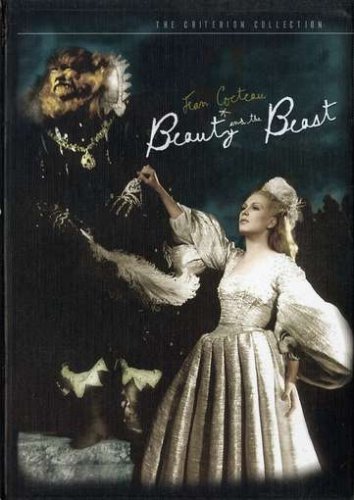 1946 – Dir. Jean Cocteau
 The idea behind Philip Glass’ opera is that it is performed live while the movie is projected behind. He painstakingly timed all of the sung lines so that they synced with the filmed actors. I imagine it is very impressive when done live. Even as just an alternative soundtrack to the movie it was enjoyable. I have to add though, that I am not overly awed by Philip Glass. While interesting, his music is just a bit too repetitive for me. I am still exploring his work though, so no official opinions yet.
 A passing comment about Tom Robbins brought Richard Brautigan into my life. According to my friend Colin, everything good about Robbins writing had been done first, and better, by Brautigan. This excited me, because while I have generally liked the few books I’ve read by Robbins, his somewhat overblown opinion of his own cleverness has always irked me.
 Recent Books –
 Recent Movies –
 by Vladimir Nabokov (1962)
 Such finickiness has paid off! “I’ve got something special for you today,” he said. “Because you’re so good with books, and because you let me borrow Pride and Prejudice and Zombies” (hahaha) “I’ve brought the Proust comic books for you.” I was quite beside myself with pride and excitement ! 🙂
 What I loved was how Heuet whittled down the story, including all of my favorite parts but skimming over those 5 page long descriptions of a drawing room, etc. All the episodes and even the passing comments that I made notes on or remember especially appeared in Heuet’s version, so the reading experience was very fulfilling.
 I went out again today, and saw a bald eagle and some mergansers and a belted kingfisher, not to mention jellyfish! The water was full of Moon Jelly –
  I finished Night Flight by Antoine de Saint-Exupery while sitting in the sun and drinking a Bloody Mary yesterday morning. It was slightly odd to be so warm and in such brightness, while reading about airplane pilots caught in black storms in the middle of the night. The book was quietly sad, but very beautiful. It told briefly but vividly a tale of the brave men who piloted night mail planes from Patagonia, Chile, and Paraguay to Argentina in the early days of commercial aviation.
 This documentary from Jacques Meny was a very interesting look at the life and work of Georges Melies, the “cinemagician” whom I was introduced to through
  by Gabriel Garcia Marquez



 what we have here is a failure to communicate